

 Submit RFI/RFP
 Request Consultation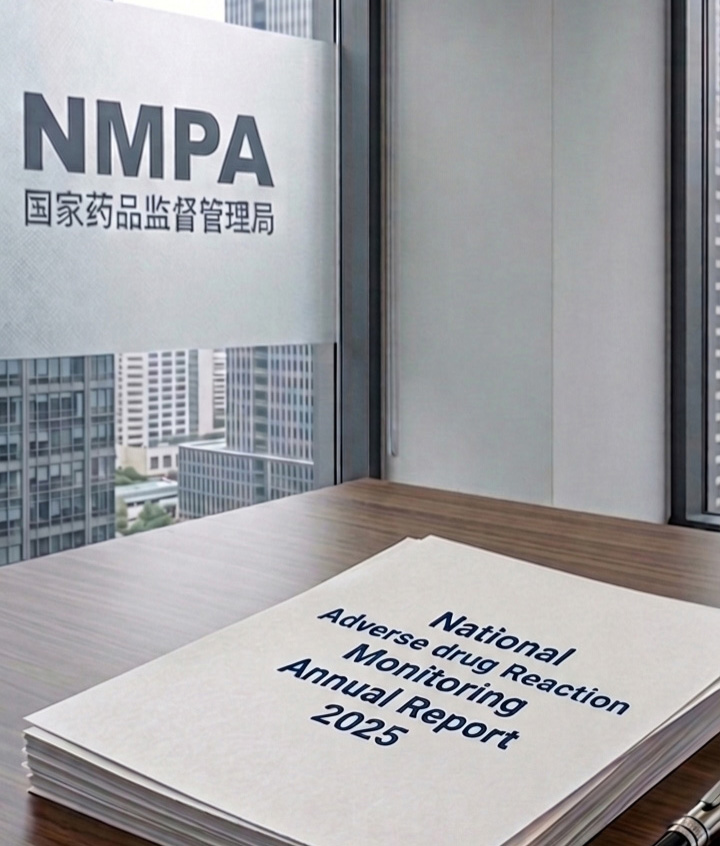
National Medical Products Administration,China NMPA and the National Center for Adverse Drug Reaction Monitoring released the National Adverse Drug Reaction Monitoring Annual Report (2025).
The report was published on April 27, 2026, to reflect the overall status of adverse drug reaction (ADR) monitoring activities in China during 2025 and support medication safety.
Chapter 1: Overview of ADR Monitoring Activities
Strengthening the Pharmacovigilance Framework
During 2025, the National Center for ADR Monitoring continued advancing pharmacovigilance and post-marketing drug safety activities.
Several technical guidelines were issued, including:
- Technical Guidelines for Post-Marketing Drug Safety Evaluation
- Technical Guidelines for Post-Marketing Risk Communication
- General Principles for Active Drug Safety Monitoring Supported by Real-World Data
These activities supported ongoing updates to pharmacovigilance regulations and inspection requirements.
Improvement of Monitoring and Evaluation Systems
China continued development of integrated national and provincial monitoring and evaluation collaboration platforms.
Additional efforts included:
- strengthening sentinel monitoring capabilities
- conducting post-marketing active monitoring studies
- pharmacovigilance inspections for Marketing Authorization Holders (MAHs)
- enhancement of ADR reporting and analysis systems
Risk Control and Regulatory Actions
Monitoring activities focused on innovative drugs and centrally procured medicines.
Safety evaluations were completed for several products, including:
- Potassium Dehydroandrographolide Succinate Injection
- Human Fibrinogen
Based on safety evaluation results, the regulator issued:
- 19 drug label revision announcements
- 1 announcement on cancellation of drug registration certificates
International Cooperation
China participated in activities related to:
- International Council for Harmonisation (ICH)
- International Coalition of Medicines Regulatory Authorities (ICMRA)
The report also noted progress related to implementation of ICH E2D(R1) guidance and China’s participation in MedDRA governance activities.
Public Engagement
National awareness activities promoting medication safety were conducted under the theme “Scientific Understanding, Safe Medication Use.”
Technological Advancement: AI-Driven Signal Detection
In 2025, the National Center for ADR Monitoring significantly integrated Artificial Intelligence (AI) and Machine Learning (ML) algorithms into the national reporting system. This transition was designed to:
- Automate Data Cleaning: Handle the screening of 2.7+ million annual reports to filter duplicates and verify data completeness.
- Enhance Signal Detection: Utilize unsupervised learning to identify “disproportionality signals” in real-time, particularly for innovative Class 1 drugs and biological products.
- Causality Scoring: Pilot AI-based causal probability scoring to reduce subjective bias in professional evaluations.
Chapter 2: ADR Reporting Data
Overall Reporting Volume
In 2025, the national ADR monitoring network received:
- 2.728 million ADR/event reports
Between 1999 and 2025, cumulative reports reached:
- 28.6 million reports
New and Serious ADR Reports
The network received:
- 937,000 new and serious ADR reports
- 508,000 serious ADR reports
Serious reports accounted for 18.6% of total reports.
Reporting Rate
The average reporting rate in China during 2025 reached:
- 1,935 reports per million population
Regional Coverage
ADR/event reports were submitted from:
- 97.9% of county-level regions nationwide
Sources of Reports
Reports originated from:
- medical institutions: 91.5%
- distributors: 4.4%
- MAHs: 4.0%
- other reporters: 0.1%
MAH reports increased by 13.7% compared with the previous year.
Reporter Profession
Reporter distribution included:
- physicians: 56.9%
- pharmacists: 25.3%
- nurses: 11.9%
- others: 5.9%
Patient Demographics
The male-to-female ratio was:
- 0.84:1
Patient age distribution included:
- children ≤14 years: 7.6%
- adults ≥65 years: 35.0%
Drug Categories Involved
Suspected drug categories included:
- chemical drugs: 79.5%
- traditional Chinese medicines: 11.8%
- biologics: 4.3%
- unclassified: 4.4%
Administration Routes
Administration routes included:
- injections: 56.0%
- oral administration: 32.6%
- other routes: 11.4%
Among injections:
- intravenous injections accounted for 90.3%
- other injection administrations accounted for 9.7%
Organ Systems Affected
The most commonly involved organ systems were:
- gastrointestinal disorders
- skin and subcutaneous tissue disorders
- Various examinations
Chapter 2.2: Chemical Drug Monitoring
Chemical drugs accounted for 79.5% of all suspected adverse drug reaction/event reports in China during 2025 and represented 83.2% of serious ADR/event reports nationwide.
Patient demographics
A male-to-female ratio of 0.84:1. Children aged 14 years and below accounted for 7.9% of reported cases, while elderly patients aged 65 years and above represented 34.9%, indicating a higher reporting frequency among older populations.
Drug Categories
The top reported categories were:
- anti-infective drugs
- antineoplastic drugs
- cardiovascular drugs
- analgesics
- nervous system drugs
Among serious reports, antineoplastic drugs represented the highest proportion accounting for 35.6%.
Dosage Forms
Reports mainly involved:
- injections: 61.8%
- oral formulations: 31.9%
Safety Considerations
The report highlighted the importance of medication safety management in:
- pediatric patients
- elderly patients
Chapter 2.3: Traditional Chinese Medicine Monitoring
Traditional Chinese medicines represented:
- 11.8% of total suspected drug reports
Serious reports accounted for:
- 4.7 % of TCM-related reports
The report noted that blood-activating and stasis-resolving medicines remained the most frequently reported category.
Patient demographics
- A male-to-female ratio of 0.78:1.
- Children aged 14 years and below accounted for 6.0% of reported cases
- Patients aged 65 years and above represented 33.5%
The most frequently reported TCM categories included:
- blood-regulating and stasis-removing medicines
- Heat-clearing and detoxifying medicines
- Heat-clearing and dampness-removing medicines
- Qi-tonifying and yin-nourishing medicines
- Wind-dispelling and dampness-eliminating medicines
Regarding dosage forms:
- oral preparations accounted for 64.1% of reports
- Injectable preparations accounted for 24.4%
Chapter 2.4: Biologics Monitoring
Biologics represented:
- 4.3% of suspected drug reports
- 7.3% of serious reports
The leading biologic category involved:
- antitumor and immunomodulatory products
Medical institutions remained the primary reporting source for biologic-related ADRs.
Chapter 2.5: Essential Medicines Monitoring
The ADR monitoring network received:
- 1.213 million reports related to products listed in the National Essential Medicines List (2018 Edition)
Serious reports represented:
- 20.4% of these reports
The report indicated that overall monitoring trends for essential medicines remained stable.
Chapter 3: Risk Control Measures
Based on monitoring and evaluation activities, regulators implemented several risk control measures during 2025.
These included:
- 19 drug label revision announcements
- updates to warnings, adverse reactions, precautions, and contraindications in the instructions for 26 (categories) of drugs
- cancellation of registration certificates for five products
Additionally, 12 editions of the Pharmacovigilance Newsletter were released, covering 50 international drug safety updates.
Chapter 4: Focus Areas and Safety Analysis
Anti-Infective Drugs
Anti-infective drugs remained the most frequently reported category.
The report noted:
- 778,000 ADR/event reports involving anti-infective products
- 145,000 serious reports
Cephalosporins, quinolones, and penicillins represented the leading reported categories.
The report highlighted that although total reporting proportions declined, serious reports increased, indicating continued safety concerns.
Biologic Antitumor Products
Biologic antitumor products generated:
- 66,187 ADR/event reports
- 32,566 serious reports
The leading product categories included:
- PD-1/PD-L1 inhibitors
- VEGF/VEGFR inhibitors
- HER-2 inhibitors
The report emphasized the importance of monitoring adverse reactions associated with antibody-drug conjugates (ADCs), including hematologic, gastrointestinal, and neurologic adverse events.
With 32,566 serious reports in this category, monitoring intensified for:
For more information: https://www.cdr-adr.org.cn/center_news/202604/t20260427_51496.html
Supporting Pharmacovigilance Processes
Large-scale ADR monitoring systems and post-marketing safety evaluations continue to increase the importance of structured pharmacovigilance operations, signal detection, and regulatory compliance activities.
Baupharma’s Pharmacovigilance services support companies in adverse event management, signal detection, safety monitoring, aggregate reporting, and post-marketing surveillance activities: https://www.baupharma.com/services-categories/pharmacovigilance/






 Submit RFI/RFP